
Why Small Group Medical Education at Sechenov Makes a Difference
Lecture halls have their place, but much of what makes a good doctor is learned in conversation: asking why, being corrected, and trying again. That is the idea behind small group medical education at Sechenov University’s Leaders in Health Innovations track. Classes are organised in small groups so that every student takes an active part. Below we look at why this matters and how it fits into the wider programme.
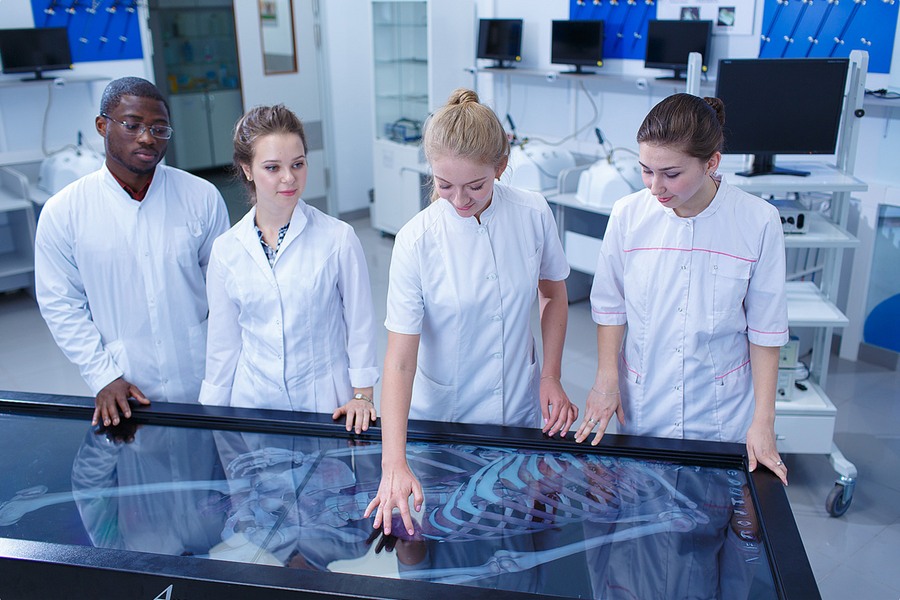
Learning by doing, not by listening
In a large group, it is easy for a student to stay silent for an entire session. Fewer people in the room changes the dynamic. Each participant is more likely to present a case, answer a question or defend a diagnosis, and that kind of active engagement tends to make knowledge stick. Medicine relies heavily on reasoning through uncertain situations, and practising that reasoning aloud, in front of peers and a teacher, is one of the most effective ways to build it. Students who feel comfortable speaking up are also more likely to admit what they do not yet understand, which is exactly where real learning begins.
Feedback that arrives in time
Feedback is most useful when it comes quickly and is specific. A teacher responsible for a small group can notice when a student misunderstands a mechanism or skips a step in an examination, and can address it on the spot. Over six years, those small corrections accumulate into a significant difference in confidence and competence. On the Leaders track, students are taught and mentored by leading researchers and practising clinicians, so the feedback comes from people with deep experience in their fields. Teachers, in turn, get a clearer picture of how each student thinks, which allows them to adjust the pace and depth of a session instead of delivering the same material to everyone.
Small groups in clinical settings
The benefits are especially clear during practical training. The programme includes an expanded practice component in leading Moscow medical institutions, including federal-level clinics with modern equipment. When students work through real clinical cases with an experienced mentor, a smaller group means more opportunities to observe closely, ask questions and take part. It also makes it easier for mentors to tailor tasks to each student’s level, giving more responsibility to those who are ready for it and extra guidance to those who need it.
Building teamwork and leadership
Small groups are also a training ground for the skills the programme’s leadership strand develops. Working closely with the same colleagues encourages students to share tasks, give and accept feedback, and take turns leading a discussion. These are the same abilities a doctor needs when coordinating a clinical team. The six-year leadership programme, which focuses on decision-making, team leadership, coaching and communication, gains practical meaning when students apply it in their everyday groups. A student who has learned to steer a small seminar discussion is better prepared to coordinate colleagues at a bedside later on.
Part of a wider support system
Group size is one element of a broader approach. Each student also has a personal curator, direct access to leading teachers and an individual development track for professional and soft skills. Together, these features aim to make sure no student gets lost in the crowd. Applicants in South Korea who value close academic guidance may find this model a good match for how they like to learn.
More information about the teaching approach is available on the programme page. To understand the entry steps, see the admissions section, and for phone numbers and the address, go to the contacts page.
To learn more, visit the official programme website at https://healthleaders.sechenov.ru/ or send your questions to healthleaders@staff.sechenov.ru.
Questions?
Contact Us

